
Desserts
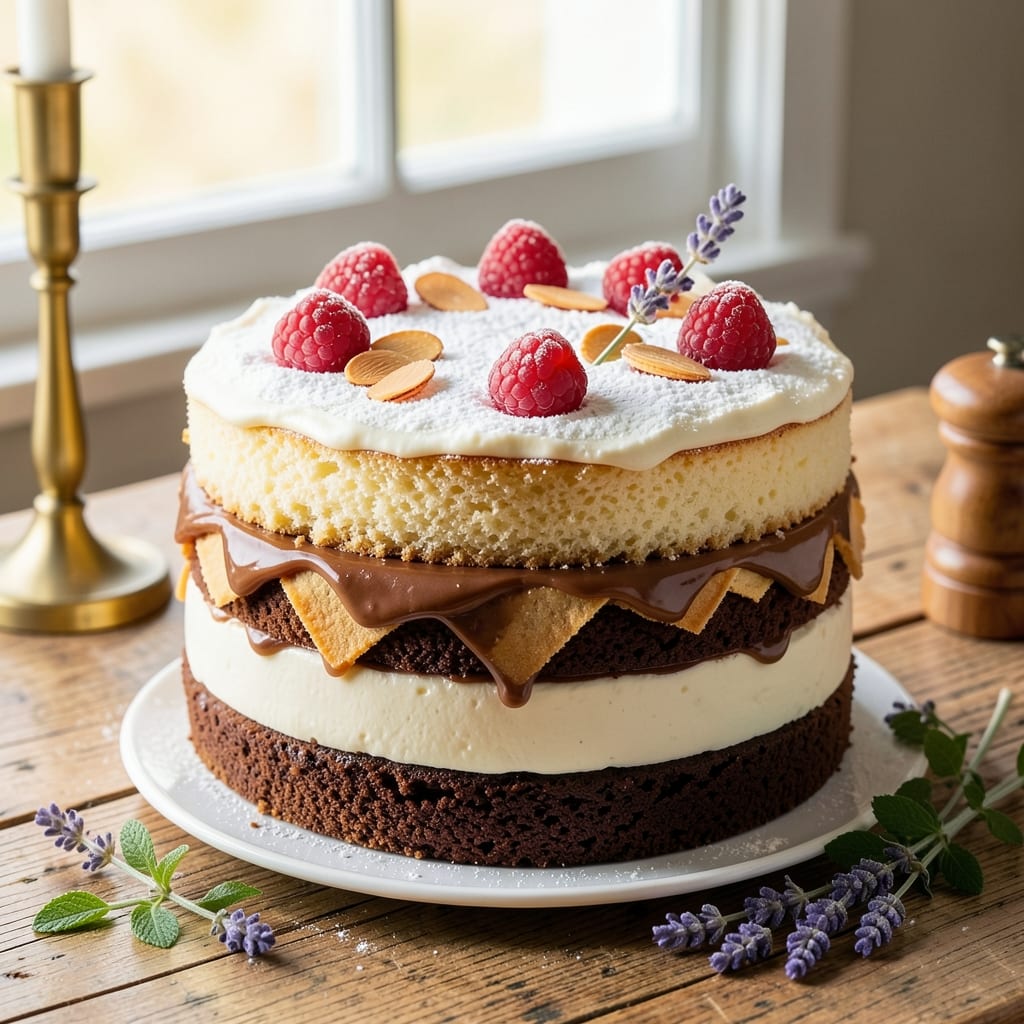
This Alpine cake recipe brings the crisp mountain air of Switzerland to your kitchen with its signature citrus zest and nutty crunch. 🌟 The secret lies in a delicate balance of tender layers and aromatic flavors—think bright lemon, toasted almonds, and a whisper of rum that transports you to Swiss alpine meadows. What sets this cake apart is its signature texture: a moist, citrus-infused sponge sandwiched between layers of buttery almond cream and a crunchy nut topping that adds just the right contrast.
The recipe begins with a simple yet precise method: whisking eggs with sugar until pale and fluffy, then folding in citrus zest and flour for a light, airy texture. The almond cream filling, made with whipped cream cheese and a touch of vanilla, adds richness without overpowering the bright citrus notes. Baking at 325°F ensures even cooking, while the nut topping achieves that perfect balance of crispiness and tenderness.
What you'll end up with is a cake that's as impressive to look at as it is to eat—golden layers with a glossy finish, studded with toasted nuts and flecks of citrus zest. The aroma alone will have everyone gathering around your table, and the first bite delivers a harmonious blend of sweet, tangy, and nutty flavors that linger long after the last crumb disappears. This is the kind of dessert that feels special enough for celebrations but simple enough for a cozy weeknight treat.
For those with dietary preferences, a gluten-free flour blend can replace all-purpose flour, and coconut cream can substitute for dairy in the filling. The cake keeps well for up to three days, making it perfect for meal prep or gifting. Let's get started on creating this timeless Swiss classic!
Ingredients for alpine cake
Bright citrus zest, toasted almonds, and buttery layers—this Swiss mountain dessert comes together with just these 14 ingredients.
| Ingredient | Amount | Notes |
|---|---|---|
| Large Eggs 🥚 | 6 whole | Room temperature for best volume |
| Granulated Sugar 🍚 | 2 cups | Superfine preferred for smooth texture |
| All-Purpose Flour 🌾 | 2 cups | Sifted for light batter |
| Unsalted Butter 🧈 | 1 cup | Cold, cubed for almond cream |
| Cream Cheese 🧀 | 8 oz | Full-fat, room temperature |
| Vanilla Extract 🌿 | 1 tbsp | Pure, not imitation |
| Lemon Zest 🍋 | 2 tbsp | Fresh, finely grated |
| Orange Zest 🍊 | 1 tbsp | Fresh, finely grated |
| Light Rum 🍹 | 1 tbsp | Optional, for alpine aroma |
| Whole Almonds 🥜 | 1 ½ cups | Toasted, roughly chopped |
| Powdered Sugar 🍚 | ½ cup | For nut topping |
| Salt 🧂 | ½ tsp | Fine sea salt |
| Baking Powder 🌶️ | 1 tsp | For lift in sponge |
| Heavy Whipping Cream 🥛 | 1 cup | Cold, for almond cream |
The citrus zest is where the magic happens—fresh is non-negotiable. Grab a Meyer lemon and a navel orange from the produce section (the Whole Foods or Trader Joe's ones are always juicy). A microplane works best for zesting—those box graters leave behind bitter pith. Toast your almonds in a dry pan until golden (about 5 minutes), then chop them while still warm. Costco sells almonds in bulk, which is worth it for this recipe. For the butter and cream cheese, Plugrá or Land O'Lakes are reliable brands—just make sure they're full-fat for that proper alpine richness.
No rum? Orange liqueur or extra zest keeps the citrus vibe. Short on almonds? Pecans or hazelnuts work too, but toast them first. The powdered sugar topping can be swapped for confectioners' sugar mixed with toasted coconut if you're avoiding almonds. For a gluten-free version, substitute the all-purpose flour with a 1:1 gluten-free blend—just don't skip the sifting, or your layers might get dense. The baking powder is crucial here; Aluminum-free like Bob's Red Mill is best for a tender crumb.
This cake keeps beautifully for 3 days at room temperature, wrapped in parchment. For longer storage, freeze the layers separately—up to 2 months. The almond topping stays crisp if you reheat it in the oven for 2-3 minutes at 300°F before serving. I always make a double batch—one for now, one for gifts. The aroma alone will have your kitchen smelling like a Swiss chalet, and the first slice? That's the real reward.
Why You'll Love This Recipe
- No Mixer Needed: I’ll admit, I don’t own a stand mixer—and this cake doesn’t miss it. The butter and sugar get whipped by hand in minutes, and the cream cheese folds right in without a fuss. Honestly, the hardest part is deciding whether to use my wooden spoon or a spatula for scraping.
- Buttery-Creamy Magic: That first bite? It’s all about the layers. The tender crumb from the flour and sugar gives way to a rich, velvety cream cheese center, while the butter adds a melt-in-your-mouth richness. Between us, it’s the kind of cake that makes you pause mid-slice to savor it.
- Weekday or Celebration: Same recipe, two vibes. Whip it up for a lazy Sunday brunch with yogurt and berries, or dress it up with powdered sugar and fresh fruit for a birthday. I’ve even served it at potlucks—no one ever guesses how simple the ingredients are.
- Leftovers That Last: This cake keeps beautifully for days, so you’re not stuck baking every time someone drops by. Slice it thin for a quick snack, or stash it in the fridge for a no-bake dessert when you’re too tired to cook. (Yes, even on a Tuesday night.)
Step-by-step instructions for Swiss mountain crunch cake
Here's how to build this showstopper—layer by layer, with crispy almonds and citrusy brightness.
👨🍳 Step 1: Make the Almond Cream Base
Toast the 1.5 cups whole almonds in a dry skillet over medium heat for 5-6 minutes until golden and fragrant. Watch them closely—they'll darken fast. Let them cool slightly, then roughly chop them with a knife. In a food processor, pulse the toasted almonds with the 1 cup cold unsalted butter and 0.5 cup powdered sugar until combined but still slightly textured.
Spread this almond mixture evenly in the bottom of a 9-inch springform pan. Press down gently to create a firm, even layer. This will be the crunchy foundation for your cake. Chill in the fridge while you make the sponge layer—it needs to be firm when you add the batter.
🍳 Step 2: Whip the Egg and Sugar Mixture
In a stand mixer fitted with the whisk attachment, beat the 6 whole large eggs and 2 cups granulated sugar on medium-high speed for 5-7 minutes until the mixture is pale, thick, and triples in volume. You'll see ribbons form when you lift the whisk—this is your signal. I like to scrape down the bowl every minute or so to make sure everything gets evenly incorporated.
Gently fold in the 2 cups sifted all-purpose flour, 1 tsp baking powder, and 0.5 tsp salt using a spatula, being careful not to deflate the batter. Then stir in the 1 tbsp vanilla extract, 2 tbsp lemon zest, 1 tbsp orange zest, and 1 tbsp light rum (if using). The batter should be smooth and glossy with just a hint of citrus sparkle.
🥘 Step 3: Layer and Bake the Sponge
Pour the batter over the chilled almond layer in the springform pan, spreading it evenly. Tap the pan gently on the counter to remove any air bubbles. Bake in a preheated 350°F oven for 40-45 minutes until the top is golden and a toothpick inserted comes out clean. The edges should pull away slightly from the pan, and the cake should spring back when gently pressed.
Let the cake cool in the pan for 10 minutes, then run a knife around the edges to loosen it before removing the springform. Transfer to a wire rack to cool completely. This cooling step is crucial—it prevents the cake from becoming gummy when you add the cream cheese layer.
👨🍳 Step 4: Prepare the Cream Cheese Filling
In a large bowl, beat the 8 oz room-temperature cream cheese with the 1 cup cold heavy whipping cream on medium speed until smooth. Gradually add the 2 cups granulated sugar and mix until fully combined. The mixture should be thick but still pourable. Fold in any remaining lemon or orange zest if you have extra—just a teaspoon or two will add extra brightness.
Spread this filling evenly over the cooled cake layer, pressing down gently to help it set. Then, using the remaining almond cream mixture, sprinkle it over the top of the filling. For extra crunch, press some of it into the sides. Chill the cake in the fridge for at least 4 hours, or overnight if possible. This gives the filling time to set properly and the flavors to meld.
Pro Tips For Making Alpine Cake
- Whip Butter First: Cream cheese and butter together at room temperature—both—before mixing with sugar. I learned this the hard way after a batch turned greasy; now I let them sit for 30 minutes (yes, even if you’re impatient like me) so they blend into a smooth, fluffy base. ---
- Sift That Flour: Alpine cake relies on lightness, so skip the scooping—sift the flour twice if it’s old or lumpy. I used to eyeball it, and the texture suffered; now I weigh it (240g for 2 cups) and sift to avoid dense layers. ---
- Bake Slow and Steady: The oven’s hot spots are real. Rotate the pan halfway through baking at 325°F (165°C) for even rising—this recipe’s cream cheese makes it prone to sinking if overcooked. My first attempt had a sunken center; now I check at 45 minutes. ---
- Chill the Batter: Let the batter rest 10 minutes after mixing—this lets the flour absorb moisture and prevents a gummy texture. I skipped it once, and the cake turned dense; now I wait, even if it feels like wasted time (your future self will thank you).
Regional styles of these flavors
Swiss Alpine Tradition
The original Alpine cake, known as Bündner Nusstorte in Switzerland, hails from the Grisons region where almonds grow abundantly in mountain orchards. This rustic cake traditionally used whole almonds toasted with butter and sugar, creating a crunchy base that contrasts beautifully with the soft sponge. The Swiss often add rum or kirsch (cherry brandy) for depth, reflecting their love of liqueurs in mountain desserts. 🌄
What makes this cake uniquely Alpine is its layered structure—each component represents a different element of Swiss baking: the nut base for rustic texture, the citrus-infused sponge for brightness, and the cream cheese filling for richness. The recipe evolved from peasant desserts meant to use simple ingredients like eggs, flour, and nuts, but today it's celebrated in Swiss patisseries as a symbol of regional pride.
French-Swiss Fusion
When Swiss bakers moved to France, they adapted the Alpine cake by incorporating crème pâtissière instead of the traditional almond cream. This version, often called Gâteau des Alpes, gained popularity in the French Alps where it became a staple at mountain huts. The French version typically includes vanilla bean and sometimes a touch of orange blossom water for floral notes. 🍋
One key difference is the use of more sugar in the French adaptation, creating a sweeter profile that balances the tartness of the citrus zest. The French also prefer a smoother nut layer, often grinding the almonds into a fine paste rather than keeping them chunky. This version is commonly served at Christmas markets and alpine resorts.
Austrian Mountain Twist
Across the border in Austria, the Alpine cake takes on a darker, spicier character with the addition of cinnamon and cardamom. Known as Almkäse-Torte, this version often includes dried apples or pears in the nut layer, reflecting Austria's love of fruit compotes. The Austrians also tend to use more butter in the almond cream, making the texture even richer. 🌟
Another Austrian tradition is to serve the cake with a scoop of vanilla ice cream or a drizzle of caramel sauce, creating a decadent dessert experience. The Austrians also incorporate poppy seeds into the nut layer for an additional crunch, adding a subtle earthy note that complements the citrus flavors.
Italian Alpine Adaptation
In Italy's alpine regions like South Tyrol, the cake becomes Torta delle Alpi and often features hazelnuts instead of almonds, reflecting the local nut crops. The Italian version frequently includes saffron for a golden hue and a subtle floral aroma. The sponge layer is sometimes infused with prosecco or Marsala wine instead of rum, giving it a lighter, bubbly quality. 🍷
Italian bakers also tend to glaze the cake with a thin layer of lemon curd before adding the nut topping, creating a glossy finish that's both elegant and practical. This version is particularly popular during Festa della Repubblica (Republic Day) celebrations, where it's served alongside other regional desserts.
Modern Nordic Variations
In Scandinavian countries, the Alpine cake has been reimagined with cloudberry jam or lingonberry compote as a filling alternative. The Nordic version often replaces sugar with honey or maple syrup, creating a less sweet but more complex flavor profile. Some modern bakers also add aquavit (Scandinavian schnapps) to the rum for a unique herbal note. ❄️
Nordic chefs frequently serve this cake with whipped cream infused with lingonberry and a sprinkle of freeze-dried berries for texture. The Scandinavian adaptation also emphasizes sustainable ingredients, often using organic nuts and locally sourced citrus. This version has become particularly popular in Nordic baking circles as a lighter, fruit-forward dessert option.
Nutrition facts
Frequently asked questions
What makes this Alpine cake different from other citrus cakes?
The Alpine cake's signature is its layered texture—crispy toasted almond base, moist citrus-infused sponge, and creamy almond filling. Unlike simple citrus cakes, it combines Swiss alpine flavors (rum, citrus zest) with a sophisticated structure that balances sweet, tart, and nutty elements. The almond cream adds richness that most citrus cakes lack.
Can I make this cake without rum?
Replace the 1 tbsp rum with 1 tsp orange liqueur or an extra 1 tsp citrus zest for brightness. For a non-alcoholic version, add ½ tsp vanilla bean paste or 1 tsp lemon juice to enhance the citrus notes. The cake will still taste delicious—rum just adds depth.
Why does the recipe call for room-temperature eggs and cream cheese?
Room-temperature ingredients whip and emulsify better, creating a lighter texture. Cold eggs won't incorporate air properly, leading to a dense sponge. For cream cheese, cold lumps won't blend smoothly, resulting in a grainy filling. Let them sit at room temperature for 30-60 minutes before using.
How do I store leftovers?
Wrap the cake tightly in plastic wrap or store in an airtight container at room temperature for up to 3 days. For longer storage, freeze the layers separately (without the nut topping) for up to 2 months. Reheat the nut topping at 300°F for 2-3 minutes before serving to restore crispiness.
Can I make this cake gluten-free?
Yes! Replace the 2 cups all-purpose flour with a 1:1 gluten-free flour blend (like Bob's Red Mill). Sift it well to avoid dense layers. The baking powder is still essential—don't skip it! The texture will be slightly different but still delicious. For extra moisture, add 1 tbsp almond milk** to the batter.