
Desserts
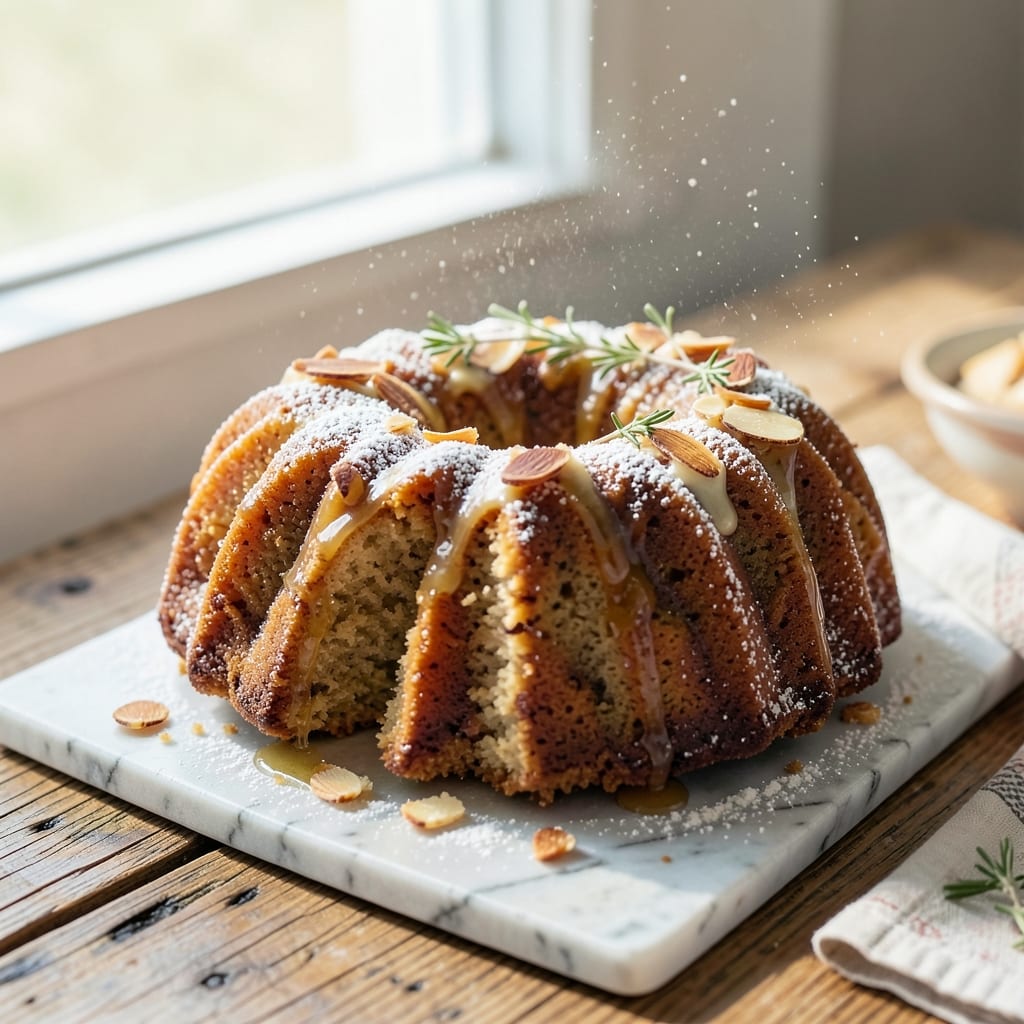
This almond bundt cake recipe from scratch delivers a symphony of toasted nut crunch and velvety vanilla depth—no shortcuts, just pure, homemade indulgence. 💛 The secret lies in toasted almond flour for rich flavor and a tender crumb, while vanilla bean elevates every bite into something extraordinary. Unlike boxed mixes, this recipe builds layers of texture and aroma that transform a simple dessert into an unforgettable centerpiece.
The bundt cake’s signature shape requires precision, but the process is surprisingly straightforward. A light batter infused with toasted almonds and vanilla ensures even baking, while a simple glaze (optional but recommended) adds a glossy finish that makes it look as good as it tastes. This isn’t just dessert—it’s a showstopper that pairs beautifully with coffee, tea, or a scoop of vanilla ice cream.
What sets this apart is the balance: moist yet sturdy, with almonds that stay delightfully crunchy rather than soggy. The vanilla bean’s aromatic notes weave through the cake, creating a flavor profile that’s both comforting and sophisticated. Whether you’re baking for a special occasion or treating yourself, this recipe delivers restaurant-quality results with minimal fuss.
Ready in just one hour (including baking time), this bundt cake is perfect for brunch, dessert parties, or a Sunday afternoon indulgence. The key to success? A well-greased pan and patience—every layer of flavor develops as it cools. Let’s get baking!
Ingredients for almond bundt cake recipe from scratch
Toasted almonds, velvety vanilla, and precise measurements create this extraordinary bundt cake from scratch.
| Ingredient | Amount | Notes |
|---|---|---|
| All-Purpose Flour 🌾 | 1 ½ cups | Sifted for lightness |
| Almond Flour 🥜 | 1 ½ cups | Toasted for enhanced flavor |
| Unsalted Butter 🧈 | 1 cup | Room temperature, cubed |
| Granulated Sugar 🍚 | 1 ½ cups | Superfine preferred for smoothness |
| Light Brown Sugar 🍚 | ½ cup | Packed firmly |
| Large Eggs 🥚 | 2 whole | Room temperature |
| Vanilla Bean 🌿 | 1 whole | Seeds scraped, pod reserved |
| Pure Vanilla Extract 🍯 | 1 tbsp | High-quality preferred |
| Whole Milk 🥛 | ¾ cup | Room temperature |
| Baking Powder 🧂 | 1 ½ tsp | Freshly opened |
| Salt 🧂 | ½ tsp | Fine sea salt |
| Almond Slices 🥜 | ½ cup | Toasted, for garnish |
| Confectioners' Sugar 🍚 | 1 cup | For glaze |
| Heavy Cream 🥛 | ¼ cup | For glaze |
The almond flour is non-negotiable here—Bob’s Red Mill or King Arthur brands yield the best texture. Toast it in a dry pan over medium heat until golden (about 5 minutes), then cool completely before using. For vanilla, Madagascar bourbon beans add depth, but Tahitian works too. The vanilla bean seeds are scraped into the batter while the pod infuses the milk for an extra layer of aroma. Pre-sift your dry ingredients to eliminate lumps, and measure your butter precisely—room temperature is critical for a tender crumb. A 10-inch Bundt pan is ideal, but ensure it’s well-greased with butter and coated with flour for easy release.
No vanilla bean? Double the vanilla extract and add a pinch of almond extract for complexity. Substitute almond flour with blanched almond meal if needed, but texture may vary slightly. For a dairy-free option, replace milk and butter with unsweetened almond milk and coconut oil, though the crumb will be denser. The glaze can be omitted entirely, but if using, whisk confectioners' sugar and cream until smooth—add lemon juice for tang if desired. Pre-toasted almond slices on top add crunch, but omit if you prefer a smoother finish. For extra moisture, brush the warm cake with simple syrup (equal parts sugar and water, heated until dissolved).
Store the cake in an airtight container at room temperature for up to 3 days—it actually improves with time as flavors meld. For longer storage, wrap tightly in plastic and refrigerate for up to 1 week, though texture may dry out slightly. Freeze for up to 3 months by wrapping in plastic and aluminum foil; thaw at room temperature before serving. The glaze, if made ahead, keeps in the fridge for 3 days—rewhisk before using. Always bring the cake to room temperature before glazing to prevent condensation. For best results, bake and serve the same day to enjoy the perfect balance of moist crumb and toasted almond crunch.
Why You'll Love This Recipe
- No Mixer Needed: I swear by this—just a bowl and a whisk. The almond flour blends in like butter (literally, since we’re using it), and the sugars dissolve smooth as silk. No standing there pulsing dough like I used to with other bundts.
- Buttery Nutty Magic: That combo of almond flour and brown sugar? It’s like a warm hug in cake form. The butter keeps it moist, but the almonds add this subtle crunch that makes every bite feel special—not too sweet, not too dry.
- Brunch or Dessert: Serve it with coffee for a sophisticated morning treat, or dust it with powdered sugar for an after-dinner showstopper. Honestly, I’ve even packed slices for lunch—it’s that good cold, too.
- Half the Cost: Almond flour’s pricey, but you only need a cup here. The rest is basic pantry stuff, and one cake feeds a crowd. Leftovers? They disappear faster than I can say “second slice.”
Step-by-step instructions for almond Bundt cake
Master these precise techniques for a Bundt cake with perfect rise and toasted almond crunch.
👨🍳 Step 1: Toast the Almond Flour and Prepare the Vanilla
Preheat your oven to 325°F and spread the 1.5 cups almond flour evenly on a baking sheet. Toast for 8-10 minutes until fragrant and lightly golden, stirring halfway. This enhances the nutty flavor and prevents bitterness in the finished cake.
While the almond flour toasts, split the whole vanilla bean lengthwise and scrape out the seeds using the edge of a knife. Save the empty pod for later—it's packed with flavor. Combine the seeds with the 1 tablespoon pure vanilla extract in a small bowl. This double vanilla infusion creates that signature depth.
🍳 Step 2: Cream Butter and Sugars for Maximum Lightness
In a stand mixer fitted with the paddle attachment, beat the 1 cup unsalted butter (cubed and room temperature) with the 1.5 cups granulated sugar and 0.5 cup light brown sugar on medium speed for 3-4 minutes. The mixture should become pale, fluffy, and nearly triple in volume. This creaming process incorporates air, which creates that signature tender crumb.
Scrape down the sides of the bowl to ensure even mixing, then add the 2 whole eggs one at a time, mixing just until combined after each addition. Add the vanilla mixture next, mixing for 30 seconds to fully incorporate. The batter should be smooth with no visible streaks of flour or vanilla.
👨🍳 Step 3: Combine Dry Ingredients and Fold Gently
In a separate bowl, whisk together the 1.5 cups all-purpose flour (sifted), 1.5 teaspoons baking powder, and 0.5 teaspoon salt. Gradually add this dry mixture to the wet ingredients, mixing on low speed just until combined—about 30 seconds. Overmixing develops gluten, which can make the cake dense.
Add the 0.75 cup whole milk and mix on low speed for another 20 seconds until just incorporated. The batter should be thick but pourable. Fold in the toasted almond flour and 0.5 cup almond slices by hand using a silicone spatula, ensuring even distribution. The almond slices should be scattered throughout, not concentrated in one area.
🔥 Step 4: Bake to Golden Perfection
Grease a 10-cup Bundt pan thoroughly with butter and dust with flour, tapping out any excess. Pour the batter into the prepared pan and smooth the top with a spatula. Bake in the preheated oven for 50-55 minutes, or until a toothpick inserted in the center comes out clean. The cake should spring back gently when pressed in the center.
I like to tent the Bundt pan loosely with foil after 30 minutes to prevent over-browning. The cake is done when the edges are golden brown and the top springs back when touched lightly. Remove from the oven and let it cool in the pan for 15 minutes before inverting onto a wire rack to cool completely.
🥘 Step 5: Prepare the Cream Glaze
While the cake cools, whisk together the 1 cup confectioners' sugar and 0.25 cup heavy cream in a bowl until smooth. Thin with 1-2 teaspoons milk if needed to achieve a drizzling consistency. The glaze should coat the back of a spoon but still flow easily.
Once the cake is completely cool, place it on a wire rack over a baking sheet. Drizzle the glaze evenly over the top, allowing it to drip down the sides. Sprinkle with any reserved toasted almond slices for extra crunch. Serve at room temperature for the best texture and flavor combination.
Pro Tips For Making Almond Bundt Cake Recipe From Scratch
- Whisk Butter and Sugar First: I learned this the hard way—mixing almond flour into dry ingredients first makes the batter clump like wet sand. Cream the butter and sugars until pale, then fold in the dry mix gently with a spatula. The goal is to keep those almond flour bits from turning into gritty pockets. ---
- Sift Almond Flour Twice: Almond flour is sneaky—it hides lumps that ruin texture. Sift it twice (yes, even if it looks fine) and pulse it in the food processor for 10 seconds first. This isn’t about fineness; it’s about breaking down those stubborn clumps that turn your cake into a dense brick. ---
- Test Doneness with a Toothpick: The Bundt’s thick center hides moisture. When the toothpick comes out with a few damp crumbs (not wet batter), pull it out immediately. Overbaking turns almond cakes into sad, dry hockey pucks—especially with the high fat content from butter and almond flour. ---
- Grease with Butter, Dust with Flour: Skip the fancy spray—melted butter on the Bundt pan, then a thin layer of all-purpose flour (tapped out, not dumped). This isn’t just for release; it’s to keep the cake from sticking to the intricate ridges where butter spray would pool and burn. Brush off excess flour—just enough to coat.
Troubleshooting perfect results
Cake Stuck in Pan
If your cake refuses to release from the Bundt pan, don’t force it—this is the #1 rookie mistake! First, ensure you greased the pan thoroughly with butter and dusted it with flour, tapping out excess. Let the cake cool in the pan for 15 minutes before inverting. If it still sticks, run a thin knife around the edges to loosen it, then gently tap the pan on the counter while pulling upward. For stubborn cases, place the pan upside down in the fridge for 10 minutes to chill and contract the cake slightly. 🔥
Dense or Gummy Texture
A dense cake usually means overmixing or underbaking. Mix the dry ingredients into the wet just until combined—no more than 30 seconds on low speed. For gummy texture, check your baking time: the cake should spring back when pressed gently and register 210°F at the center. If it’s underdone, return it to the oven for 5-10 minutes until fully set. Also, ensure your butter is room temperature—cold butter won’t cream properly, leading to a heavier crumb.
Uneven Baking or Raw Center
Uneven baking often happens when the oven isn’t calibrated or the pan isn’t preheated. Rotate the pan halfway through baking (around 25 minutes) for even heat distribution. If the center stays raw, your oven may run hot—cover loosely with foil after 30 minutes to slow browning. For precise results, use an oven thermometer to confirm your oven’s actual temperature (many run 25°F hotter than set). A toothpick test is foolproof: insert it into the center—if moist batter clings, bake 5-10 minutes longer.
Cracked Top or Sides
Cracks usually appear from sudden temperature changes or overbaking. Avoid opening the oven door early—let the cake bake undisturbed for the first 30 minutes. If cracks form, they’re more cosmetic than structural. To prevent them, bake at 325°F (not higher) and tent with foil if the top browns too quickly. For a smoother finish, brush the warm cake with simple syrup (equal parts sugar and water) before glazing—this hydrates the surface and smooths imperfections.
Almonds Too Soft
Toasted almonds should stay crunchy, not soggy. The key is timing: fold them into the batter last and avoid overmixing. If they turn soft, your cake may have been underbaked or stored improperly. For extra crunch, toast the almond slices separately for 3-4 minutes before sprinkling on top after baking. Store the cake in an airtight container at room temperature for up to 3 days—this preserves the crunch longer than refrigeration.
Glaze Too Thick or Runny
Glaze consistency is all about the ratio. For a drizzling glaze, whisk 1 cup confectioners’ sugar with 2-3 tbsp heavy cream until smooth. If it’s too thick, add 1 tsp milk at a time until pourable. If too runny, add 1 tsp more sugar and whisk vigorously. For a thicker glaze (like a dusting), reduce the cream to 1 tbsp and whisk until fluffy. Always glaze the completely cooled cake—condensation from warmth will make it slide off or dissolve too quickly. ✨
Nutrition facts
Frequently asked questions
Can I substitute almond flour with regular flour?
While you can technically replace almond flour with all-purpose flour, the texture and flavor will differ significantly. Almond flour adds natural moisture and richness, while regular flour creates a denser, less flavorful cake. If substituting, reduce by 1/4 cup (since almond flour is denser) and add 1 extra egg to maintain structure. For best results, use blanched almond meal if available.
How do I know when the cake is fully baked?
The cake is done when a toothpick inserted in the center comes out clean or with just a few moist crumbs (not wet batter). For precise baking, the internal temperature should reach 210°F. Tap the top gently—it should spring back, not feel soft. Overbaking can dry out the cake, so err on the side of slightly underdone if needed.
Can I make this cake ahead of time?
This cake actually tastes better the next day as flavors meld. Store it in an airtight container at room temperature for up to 3 days. For longer storage, refrigerate for 1 week (though texture may dry slightly) or freeze for 3 months. Thaw overnight at room temperature before serving. The glaze can be made 1 day ahead and stored in the fridge.
Why does my bundt cake stick to the pan?
Sticking happens when the pan isn't properly greased or the cake cools too quickly. Always use butter + flour (or baking spray) and tap out excess. Let the cake cool in the pan for 15 minutes before inverting. If it still sticks, run a knife around the edges and gently tap the pan while pulling upward. For stubborn cases, chill the pan upside down in the fridge for 10 minutes to help release.
Can I add chocolate chips or other mix-ins?
While the recipe is designed for almond flavor, you can add 1/2 cup dark chocolate chips or chopped nuts like walnuts for variety. Fold them in with the almond slices at the end. Avoid adding too many mix-ins, as they can make the cake dense. For a chocolate-almond version, replace 1/4 cup almond flour with cocoa powder and add chocolate chips.