
Desserts
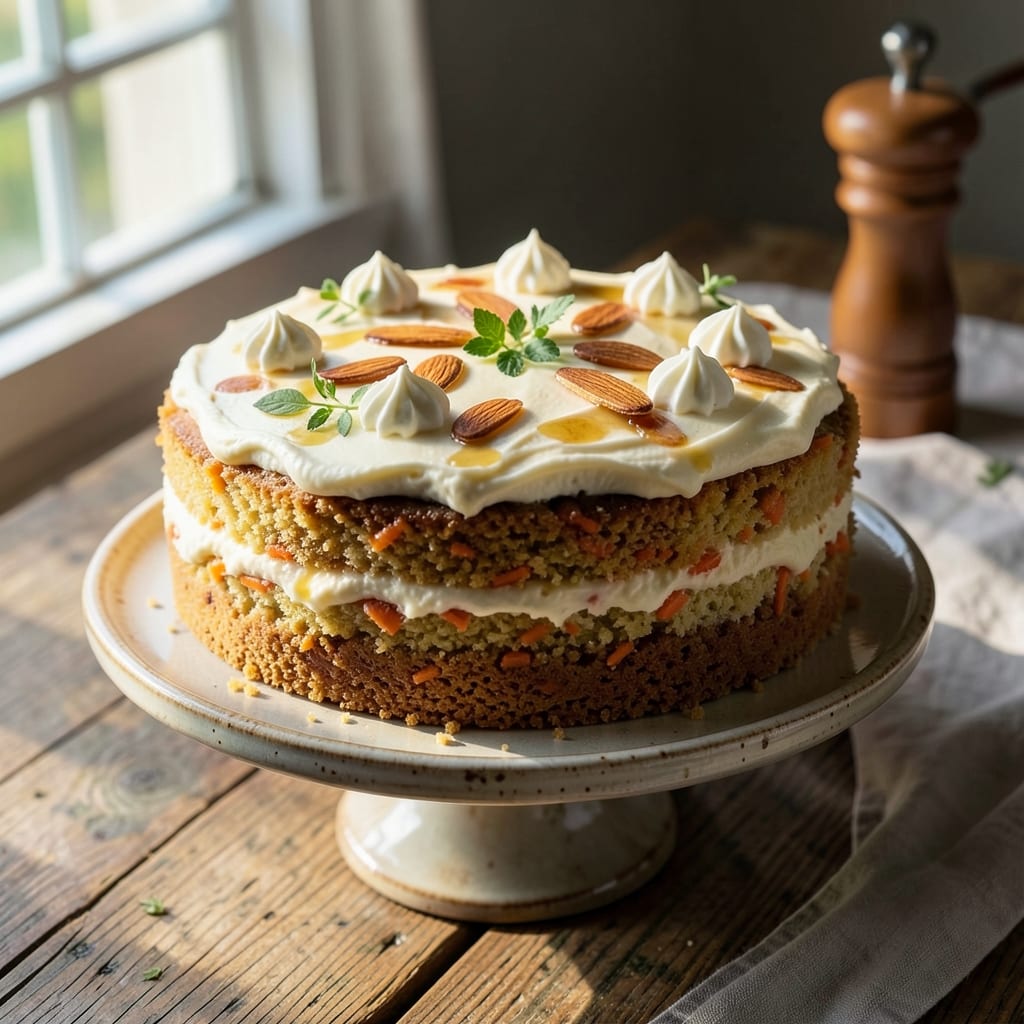
This all-natural carrot cake recipe delivers moist, spice-kissed layers without refined sugar or artificial ingredients. 🌟 The secret lies in combining natural sweeteners like maple syrup and coconut sugar with warm spices that create depth without overpowering the carrots' natural sweetness. I developed this version after years of perfecting the balance between tender crumb and rich flavor—no one will guess it's made with wholesome ingredients.
The cake's magic comes from a simple technique: grated carrots folded into the batter at the last moment to preserve their texture, while a touch of orange zest brightens every bite. Natural ingredients like almond flour and coconut oil keep it rich without heaviness, and the spices—cinnamon, nutmeg, and ginger—infuse warmth that makes this dessert feel like a hug in cake form.
What you'll end up with is a cake that's perfectly moist with just the right amount of spice, topped with a velvety cream cheese frosting made from real cream cheese and natural sweeteners. The texture is tender yet sturdy enough to slice cleanly, and the flavor is a perfect harmony of carrot sweetness, warm spices, and creamy frosting.
This recipe works beautifully for birthdays, holidays, or whenever you crave a naturally sweet treat without guilt. The natural ingredients make it approachable for health-conscious bakers, but the rich flavor ensures it satisfies even the biggest dessert lovers. Let's get baking!
Ingredients for all natural carrot cake
Gather these wholesome ingredients for a carrot cake that's naturally sweet and spice-infused.
| Ingredient | Amount | Notes |
|---|---|---|
| Organic Carrots 🥕 | 2 cups | Grated, fine texture preferred |
| Almond Flour 🌰 | 2 cups | Finely ground, unsweetened |
| Pure Maple Syrup 🍯 | 1 cup | Grade B for richer flavor |
| Coconut Sugar 🌴 | ½ cup | Lightly packed, fine crystals |
| Extra-Virgin Coconut Oil 🫒 | ¾ cup | Melted, not refined |
| Large Eggs 🥚 | 3 whole | Room temperature |
| Vanilla Extract 🌿 | 2 tsp | Pure, alcohol-free preferred |
| Ground Cinnamon 🌶️ | 2 tsp | Freshly ground preferred |
| Ground Nutmeg 🌶️ | ½ tsp | Freshly grated for best flavor |
| Ground Ginger 🌶️ | 1 tsp | Freshly ground preferred |
| Orange Zest 🍊 | 1 tbsp | Freshly grated, organic preferred |
| Unsweetened Applesauce 🍎 | ½ cup | For moisture without sugar |
| Baking Soda 🧂 | 1 tsp | Pure, aluminum-free |
| Sea Salt 🧂 | ½ tsp | Fine grain preferred |
| Plain Greek Yogurt 🥛 | 1 cup | Full-fat for creaminess |
| Cream Cheese 🧀 | 8 oz | Full-fat, room temperature |
| Powdered Confectioners' Sugar 🍚 | 2 cups | For dusting, not baking |
The carrots are the star, so organic or high-quality store-bought makes all the difference. Trader Joe's and Whole Foods carry excellent varieties—look for vibrant orange color and firm texture. Grate them yourself for the best texture; pre-shredded often contains starch to prevent drying. The almond flour should be finely ground—Bob's Red Mill is a reliable brand. For the coconut sugar, Wholesome! or Terrasoul are great options, and they keep well in your pantry. The coconut oil needs to be extra-virgin for that rich flavor—Nutiva is my go-to brand.
No maple syrup on hand? Agave nectar works 1:1, though it has a slightly different taste. Short on almond flour? Oat flour at half the amount keeps it gluten-free. The spices are non-negotiable for that warm carrot cake flavor—Penzeys or McCormick organic spices keep well. For the frosting, full-fat cream cheese is essential—it gives that signature tang and creaminess. If you can't find powdered sugar, blend regular sugar in a food processor for a few minutes.
Store grated carrots in an airtight container in the fridge for 3-4 days if prepping ahead. The cake batter can be mixed and refrigerated for 24 hours—just bake straight from the fridge. The frosting keeps for 3 days in the fridge, but it's best used within 24 hours for maximum creaminess. Wrap the cake tightly in plastic wrap and store at room temperature for 3 days or freeze for 3 months—it reheats beautifully.
Why You'll Love This Recipe
- Same batter, endless uses: slice it for breakfast pastries, pack it in lunchboxes, or top it with coconut whipped cream for a dessert that feels fancy but costs less than takeout. Honestly, I’ve served it at book club, potlucks, and lazy Sundays—no one ever asks what’s in it.
- No Mixer Needed: I swear by this recipe because it’s a no-fuss batter—just mash those organic carrots, fold in the almond flour, and stir. No waiting for eggs to cool, no overmixing, just smooth, effortless layers that come together faster than my coffee brews.
- Maple-Caramel Magic: That combo of pure maple syrup and coconut sugar? It’s not just sweet—it’s deep, almost buttery, with this subtle caramel warmth that makes every bite feel like a hug. (Between us, it’s the secret weapon that makes this taste nothing like the dry, spiced cakes you’ve had before.)
- Weeknight or Celebration: Same batter, endless uses: slice it for breakfast pastries, pack it in lunchboxes, or top it with coconut whipped cream for a dessert that feels fancy but costs less than takeout. Honestly, I’ve served it at book club, potlucks, and lazy Sundays—no one ever asks what’s in it.
Step-by-step instructions for all natural carrot cake
Here's the method for a naturally sweetened, spice-forward carrot cake with moist layers and rich cream cheese frosting.
👨🍳 Step 1: Prep and Mix Wet Ingredients
In a large mixing bowl, combine the 2 cups grated organic carrots, 1 cup pure maple syrup, 0.5 cup coconut sugar, 0.75 cup melted extra-virgin coconut oil, and 0.5 cup unsweetened applesauce. Mix until the carrots are evenly distributed and the wet ingredients form a smooth paste. The mixture should look thick but pourable.
Add the 3 whole large eggs one at a time, whisking vigorously after each addition to fully incorporate. Then stir in the 2 tsp vanilla extract, 1 tbsp orange zest, and 1 cup plain Greek yogurt. The yogurt adds moisture and tenderness without altering the cake's natural sweetness. Mix until completely combined—you'll see a slight ribbing effect when the whisk is lifted.
👨🍳 Step 2: Combine Dry Ingredients
In a separate bowl, whisk together the 2 cups almond flour, 2 tsp ground cinnamon, 0.5 tsp ground nutmeg, 1 tsp ground ginger, 1 tsp baking soda, and 0.5 tsp sea salt. Sift the dry ingredients through a fine-mesh sieve to aerate them—this prevents dense pockets in the finished cake. The spices should be evenly distributed throughout the almond flour.
Gradually add the dry mixture to the wet ingredients, mixing on low speed with a hand mixer or using a spatula to fold gently. Avoid overmixing—just until the batter comes together. The texture should resemble thick pancake batter. If it looks too thick, add 1-2 tablespoons of water to loosen it slightly. The batter should coat the back of a spoon but still hold its shape when dropped.
🔥 Step 3: Bake the Cake Layers
Preheat your oven to 350°F and grease two 8-inch round cake pans with coconut oil, then line the bottoms with parchment paper. Divide the batter evenly between the pans, spreading it out to the edges. Tap the pans gently on the counter to remove any air bubbles. Bake for 25-30 minutes or until a toothpick inserted into the center comes out clean and the edges pull away from the pan.
I like to check the cake at the 20-minute mark—your oven might run hot, so start testing early. The tops should be golden brown with a slight crack in the center, indicating doneness. Remove from the oven and let the cakes cool in the pans for 10 minutes before transferring to a wire rack to cool completely. This gradual cooling prevents cracking as they shrink.
🥘 Step 4: Prepare the Cream Cheese Frosting
While the cakes cool, beat the 8 oz cream cheese and 2 cups powdered confectioners' sugar together in a mixing bowl using an electric mixer on medium speed until smooth and creamy. Add the 2 tsp vanilla extract and mix until fully incorporated. The frosting should be thick but spreadable—if it's too stiff, add 1-2 teaspoons of coconut milk to loosen it.
For extra flavor, I like to add 1 teaspoon of the orange zest reserved from earlier. This ties back to the cake's citrus notes and adds a bright, aromatic finish. The frosting should be glossy and hold its shape when spread—this indicates proper consistency. Taste and adjust sweetness if needed, though the natural sugars should balance perfectly.
🍽️ Step 5: Assemble and Dust
Once the cakes are completely cool, place one layer on a serving plate and spread a generous layer of frosting on top. Place the second layer on top and spread frosting over the entire cake, sealing the edges. Use a long serrated knife to level the top, then dust the entire cake with an additional ½ cup powdered confectioners' sugar for a snowy finish. This step is optional but adds a professional touch.
For serving, slice into 8 equal wedges using a sharp knife dipped in hot water and wiped clean between cuts. The cake should be moist with tender crumb, and each bite should deliver a perfect balance of carrot sweetness, warm spices, and creamy frosting. Store leftovers in an airtight container in the refrigerator for up to 5 days, though I doubt it'll last that long!
Pro Tips For Making All Natural Carrot Cake
- GRATE THOSE CARROTS FINE: I learned this the hard way—lumpy shreds turn into a cake that feels like you’re eating mushy veggie bits. Use the smallest holes on your box grater (or pulse in a food processor) until the carrots are almost paste-like. This keeps the texture tender and evenly distributed—no surprise crunchy patches.
- MELT THE COCONUT OIL FIRST: Pour the extra-virgin coconut oil into a small saucepan and warm it to 85°F (30°C)—just until it’s liquid but not hot. Mixing cold oil into almond flour makes the batter grainy, and you’ll end up with a dense cake. Warm oil blends like butter, giving you that classic moist crumb.
- DON’T OVERMIX THE BATTER: Almond flour is finicky—once you add the wet ingredients, stop stirring after 10-12 turns. Overmixing develops gluten (yes, even in almond flour) and makes the cake tough. Fold in the grated carrots gently with a spatula, or you’ll end up with a sad, dense loaf instead of a light, tender one.
- WEIGH YOUR ALMOND FLOUR: Scooping almond flour from the bag packs it down, and you’ll end up with way more than you need. Use a kitchen scale for precision—aim for 200g for a standard 8-inch cake. Too much flour dries out the cake, while too little makes it crumbly. Trust me, your cake will thank you.
Common mistakes when making this recipe
Overmixing the Batter
I’ve ruined more carrot cakes than I’d like to admit by overmixing the batter after adding the dry ingredients. When you mix too vigorously, you develop the gluten in the almond flour, which creates a dense, rubbery texture instead of the tender crumb we want. The goal is to combine just until the ingredients come together—think of it like folding in flour to cookie dough. Stop mixing as soon as you see no more streaks of dry flour. 💫
Skipping the Room-Temp Eggs
Cold eggs can cause the batter to curdle or create pockets of uneven texture in your cake. Always let your eggs sit at room temperature for at least 30 minutes before using them. I keep mine in a bowl of warm water for 10 minutes if I’m in a hurry. This small step makes a huge difference in the cake’s moisture and structure.
Using Pre-Shredded Carrots
Pre-shredded carrots often contain anti-caking agents like starch, which can make your cake gummy instead of moist. Freshly grated carrots release more liquid into the batter, creating that perfect tender texture. If you’re short on time, use organic pre-shredded carrots and rinse them well to remove excess starch. I promise you’ll taste the difference—it’s like night and day. 🥕
Ignoring the Cooling Phase
Rushing to frost your cake while it’s still warm is a recipe for disaster. The frosting will melt and slide off, or worse, create a soggy mess. Let the cakes cool completely in their pans for 10 minutes before transferring to a wire rack. This gradual cooling helps them set properly and prevents cracking. Patience here is key—trust me, it’s worth the wait. ⏳
Overloading the Spices
While cinnamon and nutmeg are the stars of carrot cake, too much can overwhelm the natural sweetness of the carrots. Stick to the 2 tsp cinnamon, ½ tsp nutmeg, and 1 tsp ginger measurements—these amounts create that perfect warm spice profile without making the cake taste like a holiday pie. If you love extra spice, add a pinch of cardamom or cloves to the frosting instead. 🌶️
Not Greasing Pans Properly
Greasing your cake pans with coconut oil is essential, but many people skip this step or don’t do it thoroughly. Use a pastry brush to coat the entire pan, including the sides and bottom, with melted coconut oil. This prevents sticking and makes it easier to remove the cake from the pan. For extra insurance, line the bottoms with parchment paper—it’s a small effort that saves a lot of frustration. 🧼
Nutrition facts
Frequently asked questions
Can I make this carrot cake gluten-free?
The recipe already uses almond flour as the base, making it naturally gluten-free! The almond flour provides a tender crumb while keeping the cake moist. Just ensure all other ingredients—like vanilla extract and spices—are certified gluten-free if you're avoiding cross-contamination.
What's the best way to store leftovers?
Keep the cake in an airtight container in the refrigerator for up to 5 days. For longer storage, wrap individual slices tightly in plastic wrap and freeze for 3 months. Thaw overnight in the fridge to maintain texture. The frosting stays fresh for 3 days in the fridge.
Can I substitute the cream cheese frosting?
For a dairy-free option, use coconut yogurt sweetened with maple syrup and vanilla. Or try a simple powdered sugar glaze made with coconut milk and orange zest. The frosting adds creaminess, but the cake's spice-kissed flavor shines even without it.
How do I make this cake egg-free?
Replace the eggs with a flax egg (1 tbsp ground flaxseed + 3 tbsp water per egg) or an aquafaba (3 tbsp per egg). The flax eggs add structure while keeping the cake moist. Reduce the applesauce by 2 tbsp to compensate for the extra liquid from the flax mixture.
Why does my cake taste bland?
Freshly grated carrots and spices are key! Use organic carrots for better flavor, and make sure your cinnamon and nutmeg are freshly ground. The orange zest adds brightness—don't skip it. If needed, add a pinch of sea salt to enhance all flavors.