
Desserts
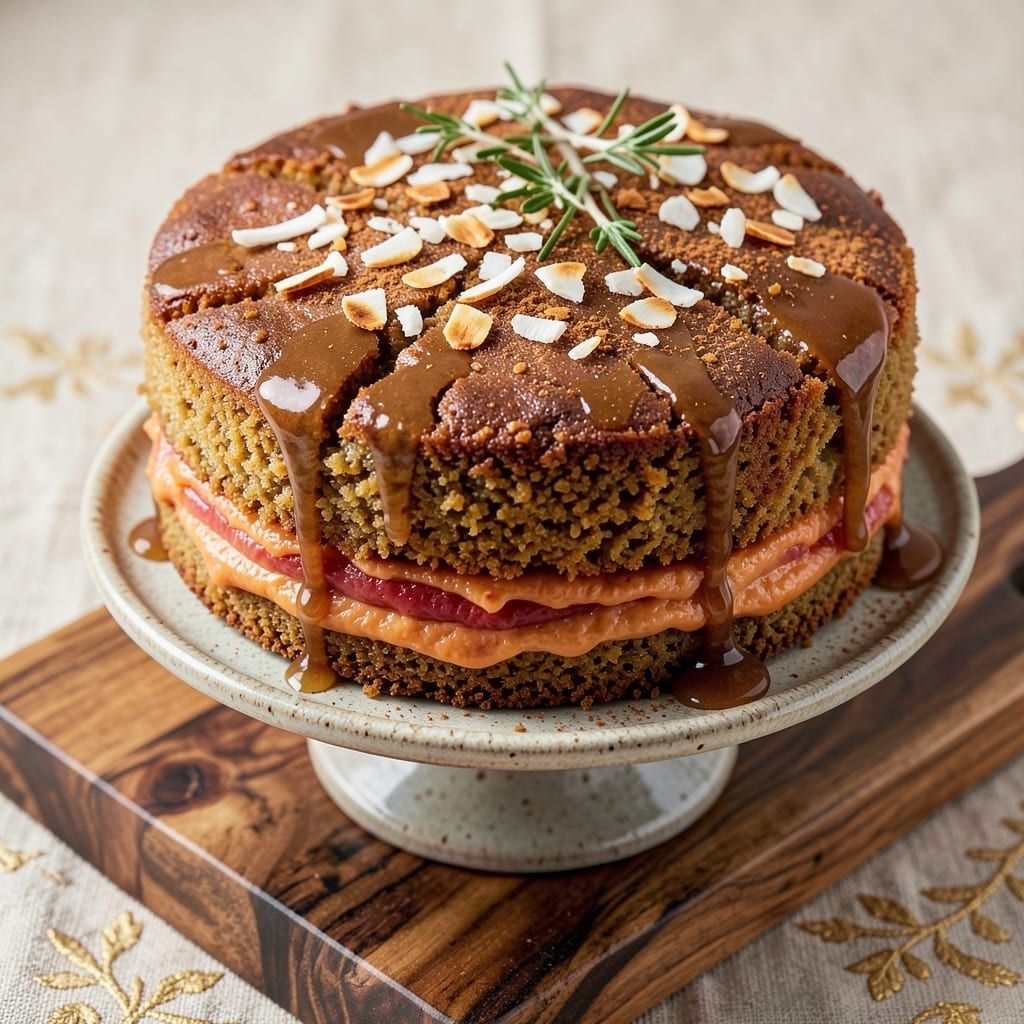
This vegan amaranth cake delivers the perfect balance of moist crumb and nutty depth—a plant-based dessert that rivals traditional flour-based cakes. 🌱 The secret lies in amaranth flour, which adds a subtle earthy richness while keeping the texture tender and fudgy. I developed this recipe after years of experimenting with gluten-free baking, and it's become a staple for special occasions. What makes this cake truly special is its fail-safe moisture—no dry crumb here. The combination of amaranth flour, almond milk, and applesauce creates a tender yet sturdy crumb that holds up beautifully. The nutty undertones from the amaranth complement the natural sweetness of the fruit, making every bite satisfying. By the time it emerges from the oven, you'll have a golden, fragrant cake with a delicate crumb and just the right amount of chew. The aroma alone will have everyone asking for seconds. This recipe is perfect for vegan diets, gluten-free needs, or anyone looking for a cake that's as nutritious as it is delicious. Serve it with a dusting of powdered sugar, fresh berries, or a drizzle of caramel for extra indulgence. Let's bake this cake!
Ingredients for amaranth cake
These twelve ingredients create a vegan amaranth cake with perfect moisture and nutty depth.
| Ingredient | Amount | Notes |
|---|---|---|
| Amaranth Flour 🌾 | 1 ½ cups | Freshly milled for optimal texture |
| Unsweetened Almond Milk 🥛 | 1 ¼ cups | Unflavored, unsweetened preferred |
| Unsweetened Applesauce 🍎 | ¾ cup | No sugar added, chunky texture |
| Maple Syrup 🍁 | ½ cup | Grade B for deeper flavor |
| Coconut Oil 🥥 | ½ cup | Melted, not solid |
| Vanilla Extract 🌿 | 1 tbsp | Pure alcohol-free preferred |
| Baking Powder 🍞 | 1 ½ tsp | Aluminum-free for best rise |
| Salt 🧂 | ½ tsp | Fine sea salt preferred |
| Ground Flaxseed 🌱 | 1 tbsp | For egg substitute |
| Water 💧 | 3 tbsp | For flax egg |
| Powdered Sugar 🍬 | ¼ cup | For dusting, optional |
| Fresh Blueberries 🫐 | 1 cup | Optional, for topping |
Amaranth flour is the star here—Bob's Red Mill or Navitas Organics are my go-tos. The freshly milled variety makes all the difference in texture. If you can't find amaranth flour, substitute half with buckwheat flour—it's got a similar earthy bite. For the almond milk, Silk Unsweetened Original works best, but any unsweetened brand in a carton will do. Avoid almond milk with added oils or sweeteners—those can throw off the delicate balance. The applesauce should be unsweetened, and Mott's or Great Value are solid budget options.
No maple syrup? Agave nectar or date syrup will work in a pinch, though the flavor profile shifts slightly. The coconut oil needs to be melted—microwave 40 seconds to just soften it. For vanilla, frontierco-op or McCormick pure extract are reliable. If you're avoiding alcohol, alcohol-free vanilla brands like Annie's are perfect. The baking powder must be aluminum-free—Bob's Red Mill or Clabber Girl are safe bets. Blueberries can be swapped for raspberries or chopped strawberries if that's what's in season. The flaxseed egg is non-negotiable for binding, but if you're really short on time, 1 tbsp chia seeds + 3 tbsp water works too.
This cake keeps beautifully—3-4 days at room temperature wrapped in beeswax wrap (or foil), or 1 week in the fridge. For longer storage, freeze portions for up to 3 months. I like to slice it into individual portions before freezing so I can grab a single serving whenever I want a treat. The flavor actually improves after the first day as the amaranth's nutty notes develop. Store powdered sugar in an airtight container away from moisture—it'll stay fresh for 6-12 months.
Why You'll Love This Recipe
- No Mixer Needed: I swear by this recipe when my hands are full—just whisk the amaranth flour and almond milk until smooth, then fold in the applesauce and maple syrup. The coconut oil melts right in, so no measuring cups or extra bowls to wash.
- Nutty-Sweet Magic: That first bite? The amaranth’s earthy depth pairs perfectly with the warm maple and creamy applesauce—like a cozy hug in cake form. Honestly, I’ve never missed refined sugar this much.
- Breakfast or Dessert: Serve it warm with a drizzle of maple syrup for pancakes, or dust with cinnamon for a dessert that doesn’t feel heavy. My kids grab slices for lunchboxes, and I sneak bites straight from the pan.
- Zero Waste, All Gain: Amaranth flour is shelf-stable, and this recipe uses up applesauce before it spoils. The leftovers? Still moist for days, and the cake freezes like a dream—just thaw and reheat for a quick treat.
Step-by-step instructions for amaranth cake
Here's how to bake a perfectly moist amaranth cake with nutty depth and tender crumb.
👨🍳 Step 1: Prepare the Flax Egg
In a small bowl, whisk together the 1 tablespoon ground flaxseed and 3 tablespoons water. Let it sit for 5-7 minutes until it thickens into a gel-like consistency—this is your egg substitute. The mixture should resemble raw egg whites in texture. This step is crucial for binding the cake without traditional eggs.
While you wait, preheat your oven to 350°F and grease an 8-inch round cake pan or line it with parchment paper. I like to use coconut oil for greasing since it's already in our ingredients, but you can use butter if preferred. The pan should be ready to go when your flax egg is fully thickened—no waiting around!
👨🍳 Step 2: Mix Wet and Dry Ingredients Separately
In a large mixing bowl, combine the 1.25 cups unsweetened almond milk, 0.75 cup unsweetened applesauce, 0.5 cup melted coconut oil, 0.5 cup maple syrup, and the thickened flax egg. Whisk until everything is fully incorporated and smooth. The mixture should be well-blended with no visible streaks of oil or applesauce chunks.
In a separate bowl, sift together the 1.5 cups amaranth flour, 1.5 teaspoons baking powder, and 0.5 teaspoon salt. This prevents lumps and ensures even distribution throughout the batter. The amaranth flour will be fine but slightly gritty—don't worry, that's normal and contributes to the cake's nutty flavor.
🥘 Step 3: Combine and Fold Gently
Pour the dry ingredients into the wet mixture and gently fold together using a spatula. Be careful not to overmix—just combine until the batter is smooth and no flour streaks remain. The amaranth flour has a tendency to develop gluten quickly, so keep your mixing gentle. Here's the thing—amaranth batter is thicker than traditional cake batter, almost like a dense brownie mixture.
Once combined, stir in the 1 tablespoon vanilla extract until fully incorporated. The batter should be thick but pourable. If it seems too stiff, you can add 1-2 tablespoons more almond milk to achieve the right consistency. This cake relies on its moisture content, so don't be afraid of a slightly thick batter—it's what makes it so tender.
🔥 Step 4: Bake Until Golden and Springy
Pour the batter into your prepared cake pan and smooth the top with a spatula. If using, gently press the 1 cup fresh blueberries into the top of the batter, leaving small gaps between them. Bake in the preheated 350°F oven for 40-45 minutes, or until a toothpick inserted in the center comes out clean with just a few moist crumbs.
You'll know it's done when the edges pull away slightly from the pan and the top has developed a golden hue. The cake should spring back gently when pressed in the center—this indicates proper doneness. Real talk: amaranth cakes can sometimes look underbaked visually, so always use the toothpick test as your guide.
⏰ Step 5: Cool and Dust with Powdered Sugar
Remove the cake from the oven and let it cool in the pan for 10 minutes. Then transfer it to a wire rack to cool completely. This cooling period is important—it allows the cake to set properly and prevents it from becoming gummy in the center.
Once fully cooled, dust the top with 0.25 cup powdered sugar using a fine-mesh sieve. This adds a beautiful finishing touch and balances the cake's natural earthiness. The amaranth cake will have a dense yet tender crumb with a subtle nutty flavor that pairs perfectly with the sweet blueberries. Slice and serve warm or at room temperature for the best texture experience.
Pro Tips For Making Amaranth Cake
- Melt the Coconut Oil Slowly: Amaranth flour loves fat, but don’t drown it—melt the coconut oil just until liquid (about 30 seconds in a microwave) and let it cool slightly before mixing. I learned this the hard way when my first batch turned into a greasy brick because the oil was too hot and cooked the flour before it even hit the pan.
- Whisk the Almond Milk First: Amaranth flour clumps like a stubborn child refusing to share. Before adding it to the mix, whisk the almond milk with the applesauce and maple syrup until smooth—this creates a silky base that won’t turn your batter into a lumpy mess. Skip this, and you’ll end up scraping flour off the whisk like it’s a crime scene.
- Bake at 350°F—No Higher: Amaranth cake has a delicate crumb that turns to ash if you crank the oven too high. Stick to 350°F and bake just until a toothpick comes out clean but slightly moist—overbaking dries it out faster than a summer day in the desert. Trust the timer less than the toothpick test.
- Add a Spoon of Vinegar: The cake will rise better if you stir in ½ teaspoon of apple cider vinegar with the almond milk. It’s not just for balance—it reacts with the flour to create tiny air pockets, giving you a lighter texture instead of a dense brick. Sounds weird, but it works: my cakes now have actual height, not just width.
Essential equipment for perfect results
Must-Have Mixing Tools
Start with a sturdy mixing bowl—I recommend a 3-quart glass or stainless steel bowl like the OXO Good Grips line. The smooth sides prevent batter from sticking, especially with amaranth's slightly gritty texture. For whisking, use a balloon whisk (like Kitchenaid or Oster) to incorporate air gently without overmixing. A rubber spatula (preferably Silpat-coated) is essential for folding dry ingredients into the wet mixture without tearing the delicate amaranth batter. 🥄
Precision Measuring Essentials
Accurate measurements are critical with amaranth flour—it's denser than wheat flour. Invest in a digital kitchen scale (I use OXO Good Grips) for the amaranth flour and baking powder to ensure consistency. For liquids, a liquid measuring cup with clear markings (like Pyrex) prevents overfilling. A fine-mesh sieve (such as OXO's collapsible one) is perfect for sifting dry ingredients to avoid lumps in the batter.
Baking Pan Recommendations
An 8-inch round cake pan with a non-stick coating (like Wilton's Perfect Results) works best for even baking. For a lighter texture, I sometimes use a springform pan (such as Nordic Ware) to prevent cracking. Always grease with coconut oil (as called for in the recipe) or use a light coating of baking spray (like Baker's Joy) for easy release. Avoid dark-colored pans—they can cause uneven browning.
Temperature Control Tools
An oven thermometer (I swear by Thermoworks Oven Thermometer) is non-negotiable—home ovens often run hot or cold. Place it near the center rack while preheating to ensure accurate 350°F temperature. For testing doneness, a long-shafted toothpick (like OXO's) helps avoid burning your fingers while checking for moist crumbs. A wire cooling rack (such as OXO's) prevents soggy bottoms during cooling.
Optional Extras for Perfection
For blueberry topping, use a small offset spatula (like Ateco) to gently press berries into the batter. A fine-mesh sieve (such as OXO's) ensures even powdered sugar dusting. For storage, beeswax wrap (like BeesWrap) keeps the cake moist longer than plastic. If freezing, quart-sized freezer bags (like Ziploc) with labels prevent freezer burn. 💫
Nutrition facts
Frequently asked questions
Can I substitute amaranth flour with regular flour?
Not recommended—amaranth flour's unique texture and nutty flavor are essential for this cake. If you must substitute, use a 50/50 blend of amaranth and buckwheat flour, but expect a slightly denser texture. Regular all-purpose flour won't replicate the moisture retention or earthy depth this recipe relies on.
Why does my amaranth cake turn out dense?
Overmixing or insufficient moisture are the most common causes. Mix just until combined, and ensure you've melted the coconut oil completely. If the batter seems too thick, add 1-2 tablespoons more almond milk—this cake thrives on its moisture content, not dryness.
Can I make this cake gluten-free?
Yes, this recipe is naturally gluten-free! Amaranth flour is inherently free of gluten, making it perfect for those with celiac disease or gluten sensitivities. Just ensure your other ingredients (like baking powder) are also certified gluten-free to avoid cross-contamination.
How do I store leftovers?
Wrap tightly in beeswax wrap or foil, and store at room temperature for 3-4 days. For longer storage, refrigerate for up to 1 week or freeze in portions for 3 months. The flavor actually improves slightly as it sits, as the amaranth's nutty notes develop over time.
What's the best way to serve this cake?
Warm slices pair beautifully with a dollop of coconut whipped cream or fresh berries. For a sophisticated touch, dust with powdered sugar or drizzle with melted dark chocolate. The cake's natural earthiness balances well with tart fruits like raspberries or citrus zest.