
Desserts
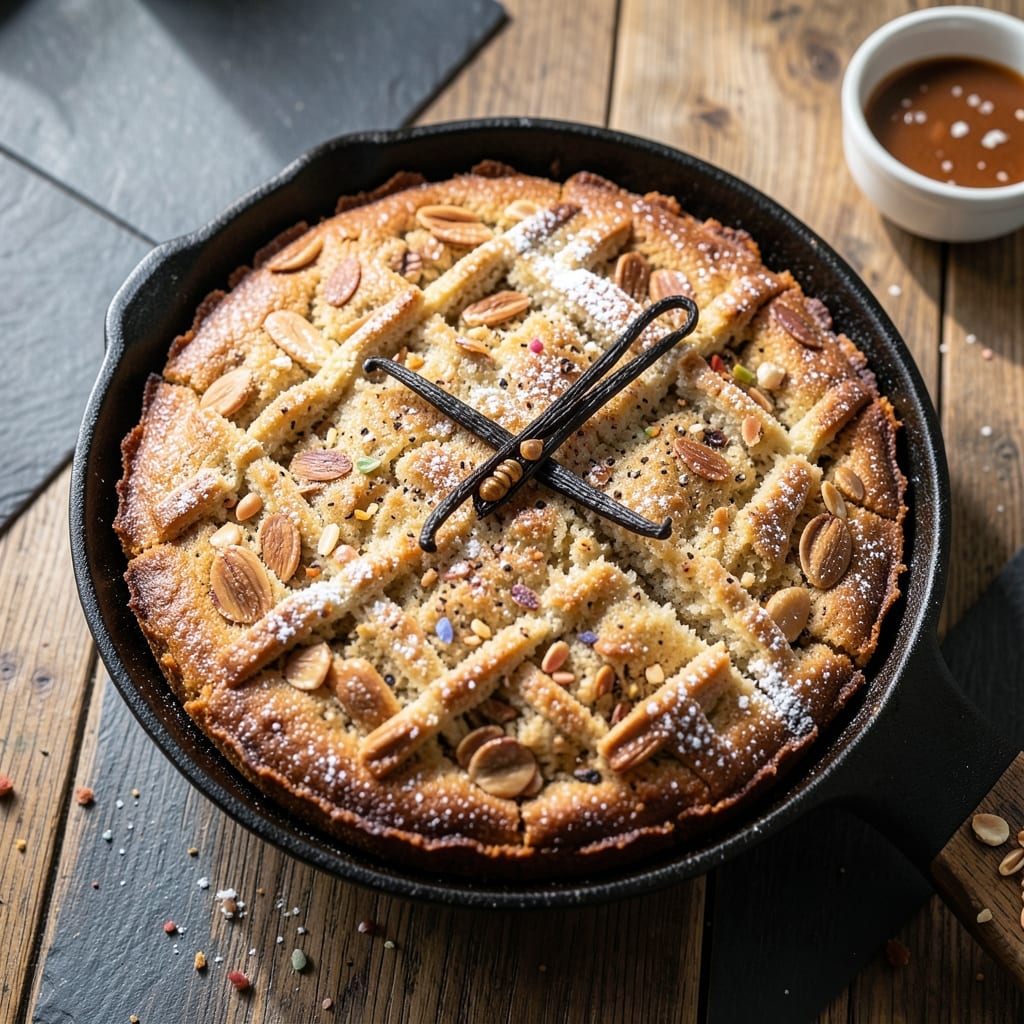
This almond skillet cake recipe delivers the perfect balance of crispy golden edges and warm, moist vanilla-almond swirls in every bite. The secret lies in almond flour for nutty depth and a touch of almond extract that infuses the cake with aromatic richness. I developed this recipe after years of perfecting skillet cakes—it’s foolproof for beginners but impressive enough for gatherings.
The cake bakes in one cast-iron skillet, creating a caramelized crust that’s impossible to resist while keeping the inside tender and fragrant. A simple vanilla bean paste swirled into the batter adds layers of flavor without overpowering the natural almond taste. The result? A dessert that feels indulgent yet light, with a texture that’s neither too dense nor too crumbly.
Once out of the oven, the cake’s edges will be golden and slightly crisp, while the center remains soft and warm. Dust it with powdered sugar, drizzle with fruit compote, or serve with whipped cream for extra elegance. It’s adaptable too—swap almond flour for oat flour for a vegan-friendly version, or add citrus zest for a bright twist.
Perfect for brunch, dessert, or even breakfast, this cake is quick to prepare and even quicker to disappear. Let’s get baking—your taste buds will thank you.
Ingredients for almond skillet cake
Almond flour, vanilla, and butter transform into a golden, crisp-edged skillet cake.
| Ingredient | Amount | Notes |
|---|---|---|
| Almond Flour 🌰 | 2 cups | Finely ground, unsweetened preferred |
| All-Purpose Flour 🌾 | ½ cup | For structure and lightness |
| Granulated Sugar 🍚 | 1 cup | White or light brown |
| Unsalted Butter 🧈 | ¾ cup | Cold, cubed for best texture |
| Large Eggs 🥚 | 2 whole | Room temperature for even mixing |
| Vanilla Bean Paste 🌿 | 1 tbsp | Or 1 tsp vanilla extract |
| Almond Extract 🌰 | ½ tsp | Pure, not imitation |
| Baking Powder 🧂 | 1 tsp | Aluminum-free preferred |
| Salt 🧂 | ¼ tsp | Fine sea salt |
| Milk 🥛 | ½ cup | Any kind, room temperature |
| Powdered Sugar 🍚 | ¼ cup | For dusting, optional |
| Vanilla Bean Seeds 🌿 | 1 whole | Scraped from 1 vanilla bean |
Almond flour is the star here—Bob’s Red Mill or King Arthur brands are my go-tos for consistency. The finely ground version makes all the difference (no gritty texture!). If you can’t find almond flour, blend whole almonds into a fine powder—just pulse, don’t over-blend. The vanilla bean paste is worth the splurge: Madagascar or Tahitian beans add depth regular extract can’t match. For butter, Plugrá or Land O’Lakes work perfectly, but don’t use margarine—this cake needs real fat for that golden crust.
No almond flour? Oat flour or coconut flour can work, but adjust liquids—oat flour needs more milk, coconut flour needs extra eggs. Running short on vanilla bean paste? Pure vanilla extract plus a pinch of vanilla sugar works in a pinch. The milk can be swapped for almond milk or oat milk if you’re avoiding dairy, but the texture might get slightly denser. For extra richness, add 1 tbsp melted coconut oil to the butter. And if you’re feeling fancy, infuse the milk with a cinnamon stick while warming it—trust me, it’s worth it.
This cake keeps beautifully—wrap tightly in plastic and store at room temp for 2 days, or refrigerate for 5 days. The edges stay crisp, but the center softens slightly over time. For longer storage, freeze the whole cake (unfrosted) for up to 2 months. To serve, reheat at 300°F for 10 minutes—it’s even better the second time around. Dust with powdered sugar right before serving, or drizzle with warm fruit compote for a restaurant-worthy touch.
Why You'll Love This Recipe
- No Mixer Needed: I swear by this one—just fold the dry ingredients into the melted butter and eggs. No electric gadgets, no fuss, and the texture turns out perfectly dense without overworking it. (Between us, I’ve ruined cakes with mixers before. Not here.)
- Rich Without Overpowering: That almond flour gives it a subtle nuttiness, but the butter and sugar keep it sweet and buttery—not heavy or cloying. Honestly, it’s the kind of cake that tastes luxurious but doesn’t scream “dessert.” My coffee-drinking husband even sneaks bites.
- Weeknight or Weekend Star: Make it for breakfast with a drizzle of honey, or save it for dessert with whipped cream. The skillet version means you’re not stuck with a whole cake—just slice what you need. I’ve served it at brunch, packed it for picnics, and even reheated slices for a quick snack. (Yes, even on a Tuesday night.)
- Budget-Friendly Luxury: Almond flour can feel pricey, but this recipe stretches it with all-purpose flour—so you’re not breaking the bank. Plus, the butter and eggs use up pantry staples, and leftovers? They reheat like a dream. My college-age kid calls it “fancy cheap food.” (I’ll take it.)
Step-by-step instructions for almond skillet cake
Here's how to bake a golden, swirled almond cake with a crisp crust and tender interior.
Prep Ingredients and Preheat
Start by preheating your oven to 350°F. While it warms, measure out all your ingredients. I like to use a stand mixer for this recipe—it makes combining everything much easier. In a medium bowl, whisk together the 2 cups almond flour, 0.5 cup all-purpose flour, 1 cup granulated sugar, 1 tsp baking powder, and 0.25 tsp salt. This dry mix is the foundation of our cake.
In a separate bowl, beat the 0.75 cup cold cubed butter until creamy but not melted. Add the 2 whole eggs, 1 tbsp vanilla bean paste, 0.5 tsp almond extract, and 0.5 cup milk. Mix until smooth—this wet mixture will create that perfect swirled texture when combined with the dry ingredients. Here's the thing—cold butter is key for that tender crumb, so don't let it soften too much before mixing.
Combine Wet and Dry Ingredients
Gradually add the dry ingredients to the wet mixture, mixing on low speed until just combined. You want to avoid overmixing—stop when there are no more flour streaks visible. Real talk: this is where many cakes go wrong. Overmixing develops gluten, which makes the cake tough instead of tender.
Once combined, scrape down the sides of the bowl with a spatula. Then, using a wooden spoon or rubber spatula, gently fold in the 1 whole vanilla bean seeds. This adds beautiful flecks of vanilla throughout the cake. The batter will be thick but manageable—don't worry if it looks a bit like cookie dough. This is exactly what we want for that perfect skillet cake texture.
Prepare the Skillet and Bake
Grease a 10-inch cast-iron skillet generously with butter and dust with flour, tapping out any excess. This ensures our cake won't stick. Pour the batter into the prepared skillet and smooth the top with a spatula. Here's my pro tip: run the spatula around the edges to create a slight well in the center—this helps the cake rise evenly and gives you that beautiful domed shape.
Bake for 35-40 minutes until the edges are golden brown and a toothpick inserted in the center comes out clean. The cake should spring back slightly when pressed in the center. I know it's tempting to open the oven door early, but resist! The cake needs that steady heat to rise properly. If the top browns too quickly, tent it loosely with aluminum foil after the first 20 minutes.
Cool and Serve
Remove the cake from the oven and let it cool in the skillet for 10 minutes. This resting period allows the cake to set slightly before you try to remove it. While it's cooling, prepare your serving plate by dusting it with 0.25 cup powdered sugar—this gives that beautiful finishing touch.
After 10 minutes, run a thin spatula around the edges of the cake to loosen it from the skillet. Place a large plate over the skillet and carefully flip it over. Lift the skillet away, leaving the cake on the plate. Serve warm with a dusting of powdered sugar on top and a scoop of vanilla ice cream if you're feeling fancy. The cake will be warm, moist, and perfectly golden—just like it should be.
Pro Tips For Making Almond Skillet Cake
- MEASURE ALMOND FLOUR BY WEIGHT: I learned this the hard way—spooning almond flour straight from the bag packs it too tightly, and you end up with a dense, brick-like cake. Use a kitchen scale for 1:1 accuracy, or if you must scoop, fluff it first with a fork and level off the cup. That extra 10 seconds saves you from dry, heavy texture.
- CREAM BUTTER AND SUGAR UNTIL PALE: This isn’t just about sweetness—stop when the mixture turns from off-white to pale yellow, about 3-4 minutes. That’s when the butter’s moisture fully emulsifies with the sugar, creating air pockets that make the cake light. I used to rush it and wondered why my cake always felt dense.
- DON’T OVERMIX THE BATTER: After folding in the eggs, mix just until combined—maybe 10-12 strokes with a spatula. Overmixing develops gluten in the all-purpose flour, turning your tender cake into a chewy disaster. The batter should look streaky, not smooth.
- LET THE BATTER REST 10 MINUTES: Sounds weird, but it works: give the batter a break before baking. This lets the almond flour absorb any excess moisture, preventing a gummy center. I was skeptical until I tried it—now it’s non-negotiable for me. Just cover it loosely with a damp towel while you preheat the oven.
Serving suggestions for this recipe
Warm Vanilla Swirl
Serve this cake warm straight from the oven for the ultimate experience—the golden edges contrast beautifully with the soft, fragrant center. I like to dust it with powdered sugar right before serving, using a fine-mesh sieve for an even coating. For extra elegance, drizzle with warm fruit compote—I recommend raspberry or apricot—just before plating. The warmth of the cake melts the compote slightly, creating a luscious sauce. 🌿
Ice Cream Pairing
A scoop of vanilla bean ice cream is my go-to pairing—it echoes the cake’s flavors while adding a cool contrast. For something lighter, try almond milk-based sorbet or lemon ricotta ice cream to balance the richness. If you’re feeling fancy, sprinkle crushed amaretti cookies or toasted almonds on top for crunch and extra almond flavor. Serve immediately after dusting with powdered sugar.
Coffee or Tea
This cake is perfect with a cup of espresso or earl grey tea—the bitterness of coffee cuts through the sweetness, while the tea’s floral notes complement the vanilla. For a brunch setting, I love pairing it with chai latte or matcha green tea. Avoid heavy cream-based drinks like lattes, as they’ll make the cake taste even richer than it already is.
Make-Ahead Serving
If you’re serving this cake later, reheat it at 300°F for 10 minutes to restore its warmth and crisp edges. For a make-ahead dessert table, keep the cake at room temperature and assemble toppings separately. I recommend warm caramel sauce or whipped cream for a restaurant-style finish. Store any leftovers in an airtight container for up to 2 days—the flavors only get better over time.
Seasonal Variations
In summer, add fresh berries (strawberries, blueberries) as a topping—their acidity brightens the cake’s richness. For fall, swap the vanilla bean paste for cinnamon and orange zest, then top with candied pecans. Winter calls for spiced rum sauce or dark chocolate ganache** drizzled over the top. The cake’s neutral base makes it incredibly adaptable! ❄️
Nutrition facts
Frequently asked questions
Can I use almond flour substitutes in this recipe?
The cake relies on almond flour for its signature texture, but you can swap it with oat flour or coconut flour. If using oat flour, add 1 extra tablespoon of milk per 1 cup of oat flour. For coconut flour, reduce other liquids by 2 tablespoons and add 1 extra egg to maintain moisture. The flavor will differ slightly, but the cake will still be delicious!
Why does my almond skillet cake sink in the middle?
This usually happens from overmixing the batter or opening the oven too soon. Mix just until combined to avoid developing gluten, and resist peeking at the cake before the 30-minute mark. If it sinks slightly, reheating it at 300°F for 10 minutes often restores its structure.
How do I make this cake vegan?
Replace the butter with coconut oil or vegan butter, use flax eggs (2 tbsp ground flaxseed + 6 tbsp water per egg), and swap regular milk for almond or oat milk. For extra richness, add 1 tbsp melted coconut oil to the batter. The texture will be slightly denser but still moist and flavorful!
Can I bake this cake in a different pan?
Yes! Use a 9-inch round cake pan or 8x8-inch square pan, but reduce baking time by 5-10 minutes. For a non-stick pan, grease it lightly with oil instead of butter and flour. The edges may be slightly thicker, but the cake will still have that signature golden crust.
What’s the best way to store leftovers?
Keep the cake in an airtight container at room temperature for up to 2 days, or refrigerate for 5 days. For longer storage, freeze the whole cake (unfrosted) for up to 2 months. To serve, reheat at 300°F for 10 minutes—it’s even better warmed through!