
Desserts
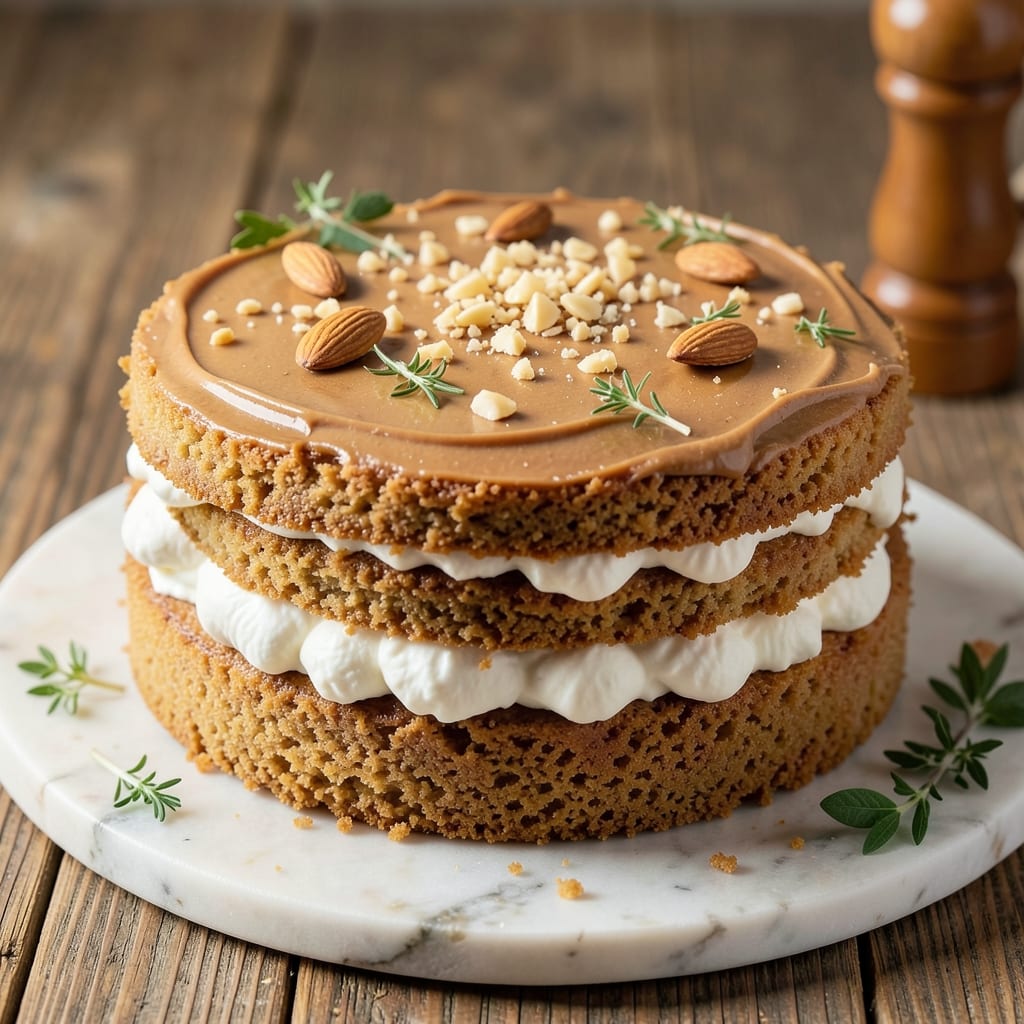
This almond cookie cake delivers layers of buttery cookie crumbles and moist cake infused with rich almond flavor—every bite is a perfect balance of texture and taste. 💛 The secret lies in a simple yet precise technique that creates those signature swirls of cookie dough throughout the cake batter, ensuring each slice offers both crunch and softness in every forkful.
What sets this recipe apart is the harmony between the cookie and cake components. The cookie dough, made with almond flour and butter, gets folded into the cake batter for those iconic nutty swirls, while the cake itself stays tender and moist thanks to a precise mix of flour, sugar, and eggs. The result? A dessert that's elegant enough for special occasions but simple enough for a weeknight treat.
When you pull this cake from the oven, you'll find golden-brown layers with crisp edges and a velvety crumb in the center. The almond flavor shines through without overpowering, while the butter adds a rich, satisfying depth that makes every bite irresistible. Perfect for celebrations or simply indulging in a homemade dessert, this cake combines the best of cookies and cake into one unforgettable treat.
The best part? This recipe delivers restaurant-quality results with straightforward steps and ingredients you likely already have on hand. Whether you're baking for a crowd or treating yourself to a special dessert, this almond cookie cake is sure to impress with its beautiful presentation and delicious flavors.
Ingredients for almond cookie cake
Buttery cookie dough meets tender cake in this almond dream—just 13 ingredients for restaurant-worthy swirls.
| Ingredient | Amount | Notes |
|---|---|---|
| Almond Flour 🥜 | 2 ½ cups | Finely ground for smooth texture |
| All-Purpose Flour 🌾 | 1 ½ cups | Sifted for light batter |
| Unsalted Butter 🧈 | 1 ½ cups | Cold, cubed for cookie dough |
| Granulated Sugar 🍚 | 2 cups | Superfine preferred for smoothness |
| Light Brown Sugar 🍚 | ½ cup | Packed for cookie dough |
| Large Eggs 🥚 | 4 whole | Room temperature for even mixing |
| Vanilla Extract 🌸 | 2 tsp | Pure vanilla for authentic flavor |
| Baking Powder 🍞 | 2 tsp | Freshly opened for lift |
| Salt 🧂 | ½ tsp | Fine sea salt preferred |
| Almond Extract 🌿 | 1 tsp | Pure, not imitation |
| Chocolate Chips 🍫 | 1 ½ cups | Semi-sweet for classic flavor |
| Powdered Sugar 🍚 | 1 cup | For dusting finished cake |
| Heavy Cream 🥛 | ½ cup | Whipped for frosting option |
The almond flour is where the magic happens—Bob's Red Mill or Anthony's Goods are my go-tos for that ultra-fine grind. If you can't find almond flour, blend whole almonds into a fine powder (food processor, 3-5 minutes), but don't skip the sifting step. The butter? Plugrá or Land O'Lakes work perfectly—just make sure it's cold when you start the cookie dough. Pro tip: buy it in that big block form, not sticks, and cube it yourself for better texture. Chocolate chips? Ghirardelli or Guittard are worth the splurge—they melt so much better than store brands.
No almond extract? Almond butter at half the amount works in a pinch, but you'll lose that signature aroma. Running low on vanilla? Vanilla bean paste gives you those little specks for free. The baking powder needs to be fresh—if it's been sitting in your pantry for months, test it first (mix with water, should bubble). For the cookie dough, I always use both brown and white sugar—the brown keeps it moist while the white gives that crisp edge. And if you're feeling fancy, swap half the chocolate chips for white chocolate or chopped toasted almonds.
This cake keeps beautifully—3 days at room temperature covered loosely with plastic, or 1 week refrigerated. For longer storage, slice and freeze portions between parchment paper for up to 3 months. The frosting? Whip that heavy cream with powdered sugar right before serving—it sets faster than you'd think. I always make a double batch because it disappears fast. And if you've got leftovers? Warm slices in the oven for 10 seconds to revive that buttery crunch.
Why You'll Love This Recipe
- I’ll be real: almond flour isn’t cheap, but this recipe stretches it. The all-purpose flour keeps costs down, and the butter-to-sugar ratio means you’re not sacrificing flavor. Leftovers? They last days, and I’ve even frozen slices for quick breakfasts—because yes, cake for breakfast is a vibe.
- No Mixer Needed: I swear by this recipe when I’m too lazy to cream butter and sugar—just use your hands. The almond flour gives it that perfect crumb without overworking the dough, and honestly? The butter stays soft enough that it’s almost foolproof.
- Buttery-Almond Magic: That combo of brown sugar and almond flour? It’s like a cookie and cake had a baby, but make it better. The butter keeps it rich, while the almonds add a nutty depth that makes every bite feel like a little treat—no frosting required.
- Weeknight Crowd-Pleaser: Between us, this is my go-to when I’ve got friends over at 7 PM with no warning. It’s sturdy enough to slice for sharing, but light enough that no one feels guilty about seconds. Plus, the almond flour keeps it from getting soggy if it sits out.
Step-by-step instructions for almond cookie cake
Here's how to create that perfect nutty swirl with buttery layers—every bite will be pure comfort.
👨🍳 Step 1: Prepare the Cookie Dough Base
In a stand mixer fitted with the paddle attachment, cream together the 1.5 cups unsalted butter and both sugars (2 cups granulated sugar and 0.5 cup light brown sugar) on medium speed for 3-4 minutes. You'll know it's ready when the mixture lightens in color and nearly doubles in volume. This creaming step is crucial—it incorporates air for that signature tender crumb.
Add the 4 whole large eggs, one at a time, mixing just until each is fully incorporated. Then stir in the 2 teaspoons vanilla extract and 1 teaspoon almond extract. Here's the thing—almond extract is potent, so start with just ½ teaspoon and taste before adding the full amount. The batter should be thick but pourable at this stage.
👨🍳 Step 2: Combine Dry Ingredients and Fold in Chocolate
In a separate bowl, whisk together the 2.5 cups almond flour, 1.5 cups all-purpose flour, 2 teaspoons baking powder, and 0.5 teaspoon salt. Sift the dry ingredients directly into the wet mixture to avoid lumps. Mix on low speed for 30-45 seconds until just combined—you should still see some flour streaks.
Remove the bowl from the mixer and gently fold in the 1.5 cups chocolate chips using a silicone spatula. Be careful not to overmix; you want the chocolate chips distributed evenly but not broken up. The dough will be thick and sticky—this is normal and exactly what we want for that perfect cookie cake texture.
🥘 Step 3: Assemble the Cake Layers
Preheat your oven to 350°F and grease an 8-inch round cake pan (or two 6-inch pans if preferred). Spread about ⅓ of the dough evenly in the bottom of the pan and press down gently with your fingers. Here's where it gets fun—sprinkle about ¼ cup of the remaining dough over the first layer, then add another ⅓ of the dough on top.
Repeat this layering process, ending with the final ⅓ of dough on top. The goal is to create distinct cookie layers with swirls throughout. Gently press down on the top layer to create an even surface. Bake for 25-30 minutes until the edges are golden brown and a toothpick inserted in the center comes out clean.
🔥 Step 4: Create the Buttery Swirl Topping
While the cake bakes, prepare the topping by melting the remaining ½ cup heavy cream with 2 tablespoons granulated sugar in a small saucepan over low heat. Stir constantly until the sugar dissolves completely—you want a smooth, glossy glaze. Let it cool slightly before brushing it over the hot cake.
As soon as the cake comes out of the oven, brush the entire top with the warm cream mixture. Watch it transform right before your eyes—the cake will develop a beautiful golden sheen. Let the cake cool in the pan for 10 minutes, then transfer to a wire rack to cool completely.
🍽️ Step 5: Dust and Serve with Confidence
Once the cake has cooled completely, dust the top generously with the 1 cup powdered sugar using a fine-mesh sieve. This creates that classic cookie cake finish. For extra flair, you can also pipe a simple whipped cream frosting around the edges using the remaining ¼ cup heavy cream (whipped with a pinch of powdered sugar).
Slice into wedges and serve warm for that melt-in-your-mouth texture. Each bite should deliver a perfect balance of buttery cookie layers, nutty almond flavor, and rich chocolate chips. Real talk: this cake tastes even better the next day when the flavors have fully melded together.
Pro Tips For Making Almond Cookie Cake
- CHILL THE DOUGH: I learned this the hard way—after baking a warm almond cookie cake, it came out dense and flat. Let the dough rest uncovered in the fridge for at least 2 hours (or overnight). The cold slows gluten development in the all-purpose flour and lets the almond flour hydrate properly, so it bakes up taller and lighter.
- WEIGH THE ALMOND FLOUR: Scooping almond flour straight from the bag packs it too tightly, and you end up with a dry, crumbly texture. Use a kitchen scale for precision—most recipes call for 1:1 substitution with all-purpose flour, but a 10-15% overage (by weight) gives that signature cookie-cake chew. Spoon it into the cup and level with a knife if you’re measuring by volume.
- BUTTER AT ROOM TEMP: Cold butter creates pockets that won’t melt evenly, leaving you with a cake that’s underbaked in spots but overcooked elsewhere. Take the unsalted butter out 1-2 hours before mixing—it should dent when pressed but not be greasy. If you’re in a rush, microwave it in 10-second bursts until soft but not liquid.
- STOP WHEN EDGES SPRING: Almond cookie cake tests done aren’t reliable—this dough’s dense enough to pass the toothpick trick even when underbaked. Instead, press the center gently: if it springs back slowly (not instantly), it’s ready. Overbaking dries out the almond flour, turning it chalky. Pull it out early and let it rest 5 minutes before slicing.
Serving suggestions for almond cookie cake
Warm Cream Frosting
Whip ½ cup heavy cream with 2 tablespoons powdered sugar until soft peaks form. Spread this light frosting over the cooled cake layers for a delicate finish that complements the cookie texture. For extra flair, drizzle with 2 tablespoons melted white chocolate before dusting with powdered sugar. This keeps the cake from feeling too heavy while adding visual appeal. 🥛
Fresh Fruit Pairings
Serve slices with sliced strawberries or raspberries on the side—their bright acidity cuts through the rich butter and almond flavors. I love arranging fresh berries in a circular pattern around the cake on the plate. For a tropical twist, try mango slices or kiwi, which add a refreshing contrast to the nutty base.
Coffee or Tea Serving
This cake pairs beautifully with espresso or chamomile tea. The bitterness of coffee enhances the almond notes, while tea adds a soothing complement. For a special touch, serve with a small cup of vanilla latte made with the same heavy cream used in the frosting. The warmth of the drink enhances the cake's buttery texture. ☕
Garnish Ideas
Add toasted sliced almonds around the edges for extra crunch and visual appeal. I sprinkle them while the frosting is still wet so they stick. For a festive look, use crushed peppermint candies during the holidays or edible gold leaf for elegant occasions. These garnishes elevate the presentation without overpowering the cake's natural flavors.
Portioning Tips
Use a sharp serrated knife heated in hot water for 10 seconds before each slice. This creates clean cuts and prevents crumbling. For parties, serve on a wooden cake stand with a dusting of powdered sugar. Individual portions look especially elegant when served on mini dessert plates with a single berry on the side. 🍽️
Make-Ahead Serving
This cake actually improves overnight—store leftovers in an airtight container at room temperature for up to 3 days. Reheat slices in the oven at 300°F for 5-7 minutes to restore that buttery crunch. For a quick serving option, wrap individual slices in parchment paper and tie with twine for a beautifully packaged treat. Perfect for gifting!
Nutrition facts
Frequently asked questions
Can I make this almond cookie cake gluten-free?
Yes! Replace the 1.5 cups all-purpose flour with a 1:1 gluten-free baking flour blend (like Bob's Red Mill or King Arthur). Use 1.5 cups gluten-free flour plus 1 teaspoon xanthan gum to maintain structure. The almond flour already provides natural gluten-free binding, so no other substitutions are needed. Just be sure to sift the gluten-free flour well to avoid lumps.
Why did my cookie cake turn out dense instead of light? Overmixing the batter or underbaking are the most common culprits.
How do I store leftovers without drying out the cake?
Store slices in an airtight container at room temperature for up to 3 days, or refrigerate for 1 week. For longer storage, freeze individual slices wrapped in plastic wrap for up to 3 months. To revive texture, warm frozen slices in the oven at 300°F for 5-7 minutes before serving. Never store the whole cake in the fridge—it'll dry out faster.
Can I add nuts other than almonds to this recipe?
Try pecans or walnuts for a different texture—chop them finely and fold them into the cookie dough along with the chocolate chips. For a sweeter nut flavor, use hazelnuts (toasted and skinned). Just reduce the almond flour by ½ cup to maintain the right balance. The key is to keep the dough workable—don't add more than 1 cup total nuts.
What's the secret to getting those perfect swirls?
The magic happens in the layering! After spreading your first layer of dough, use a spoon to create small mounds of the remaining dough on top, then gently swirl them with a butter knife. Press down lightly to encourage the swirls to melt into the layers. For extra drama, use a skewer to draw patterns in the top layer before baking. The key is patience—don't rush the layering process.